0:00 - INTRO
0:04 - Shiny Horse Mustard room (Creative Direction, Animation, Texture Mapping, Rendering)
0:07 - The Onion: TODAY NOW! (Matte Painting, Keying, Motion Tracking, Color Correction)
0:10 - Acerbic Films: VIP Mortgage (Creative Direction, Animation, Modeling, Texture, Rendering)
0:12 - Design4U (Creative Direction, Animation)
0:15 - The Onion: ONN Cast - Wendy's Commercial (Keying, Camera Moves, 3D Composite)
0:20 - The Limited TOO Zorb Projection - (Creative Direction, Animation)
0:22 - Cheddar Getter - (Creative Direction, Character Rigging, Texture Mapping, Rendering)
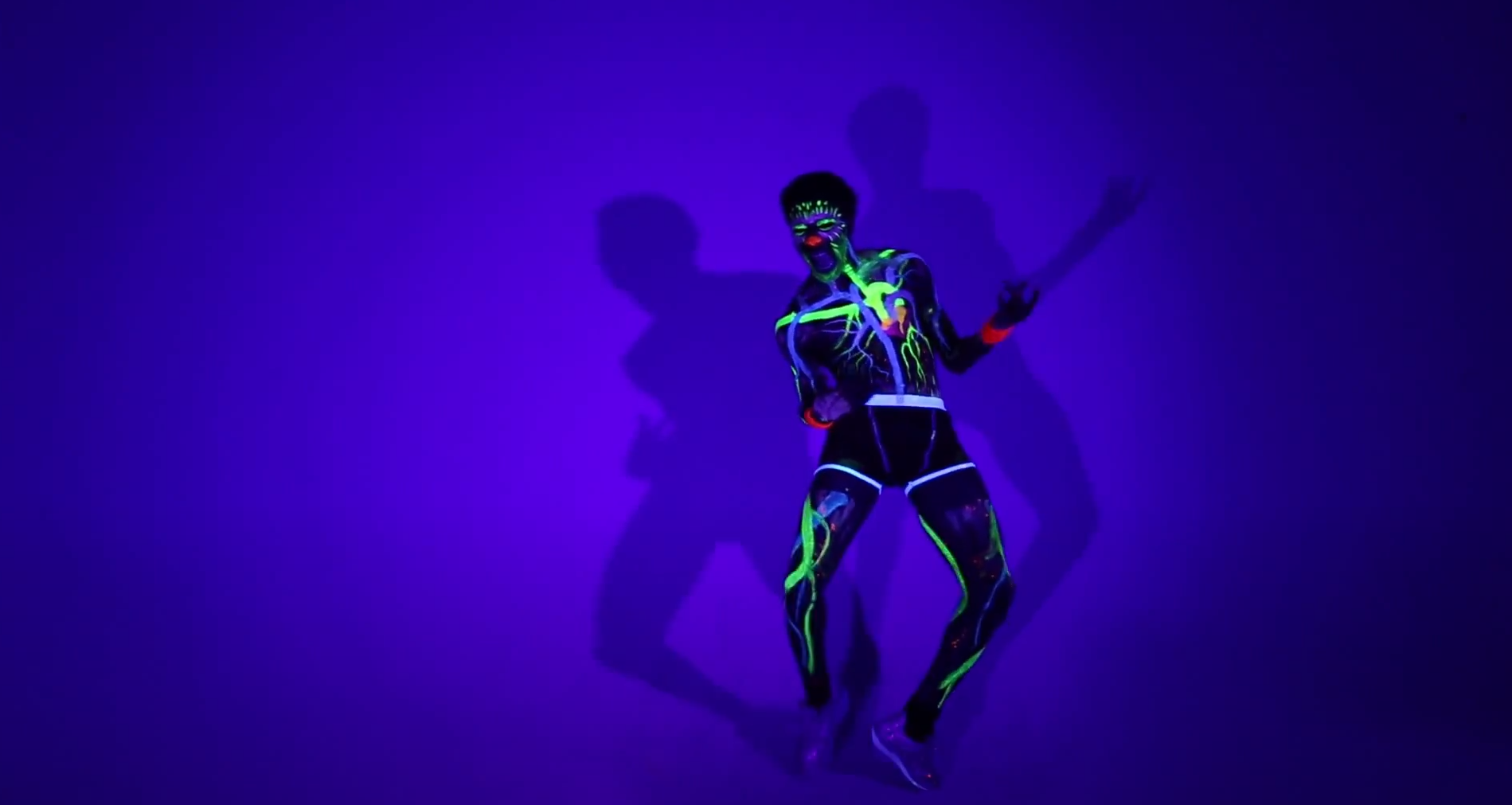
0:25 - Diane Coffee "HYMN" - (Creative Direction, Character Rigging/Modeling, Animation)
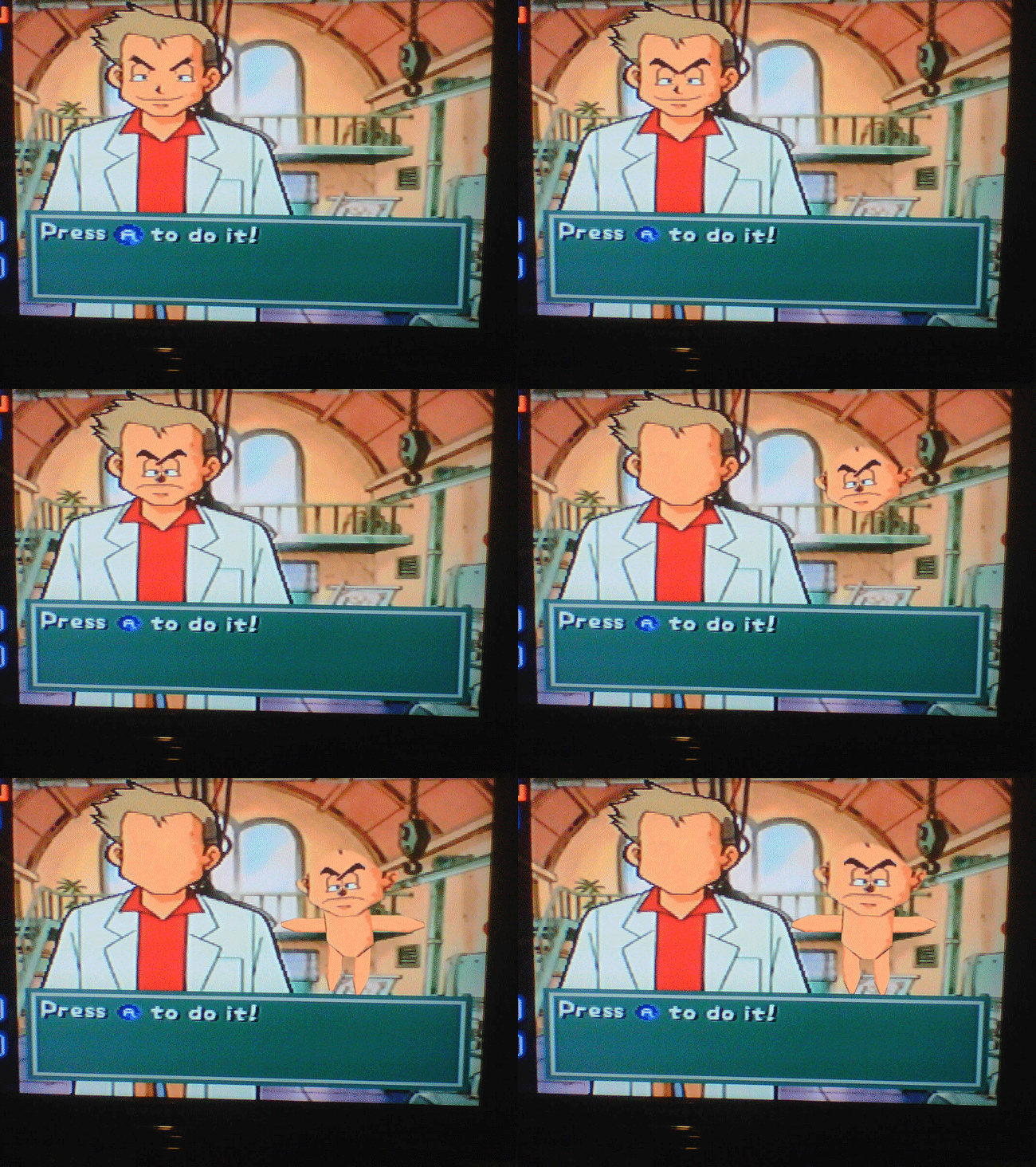
0:28 - Bethesda Games/The Onion: Wolfenstein 2nd person (Character Rigging, Animation, Rendering)
0:30 - Green Dogs - (Personal Project)
0:32 - The Onion: TODAY NOW! - Real Life Mr. Ed (Matte Painting, Animation, Color, and the Horse of course)
0:36 - The Onion: TODAY NOW! - Police Chase (3D Environment, Animation, Texture Mapping, Compositing)
0:38 - Cheddar Getter - (Creative Direction, Rigid Body Dynamics Cheese Factory Creation, Materials, etc.)
0:41 - The Limited TOO: Ceiling Projection - (Looped 3D Environment, Xpresso Rigged Cloud Generator)
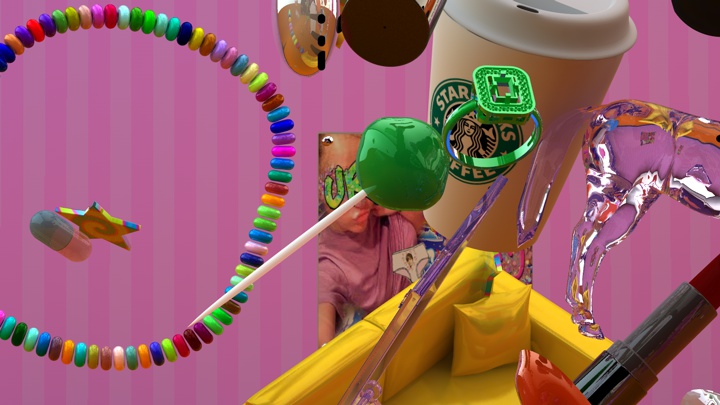
0:43 - GIRAFFAGE VJ Loop - (Creative Direction, Animation, Modeling, Texture Mapping)
0:46 - Venus Twirl - (Personal Project)
0:47 - 2D Spherical Faces - (Personal Project)
0:48 - OUTRO
Audio: Onra - The Anthem
Additional Compositing/Directing by: JJ Shebesta - Eric Overton - Torlando Hakes - Matt Starr
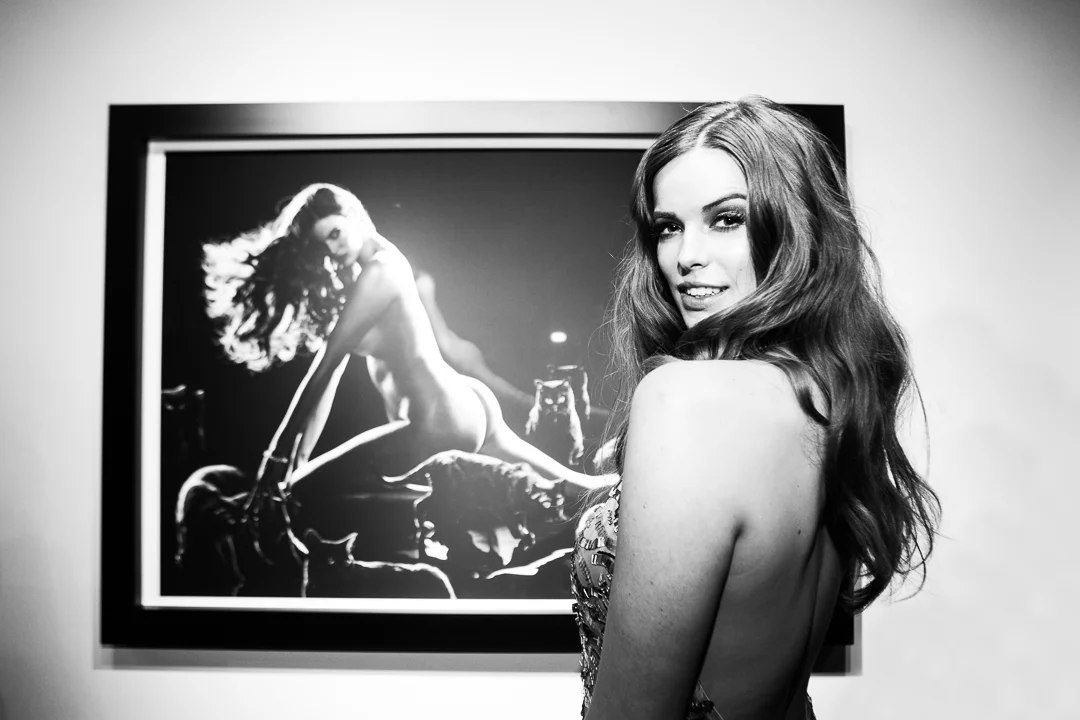
A collaboration between Kenneth Willardt, Robyn Lawley, Matt Starr, Rachel Weaver, and Myself. Together we created the first 3D projection mapping in the Chelsea Arts District. An incredible night and opportunity to work with such creative people.
Courtesy of: Milk Made Magazing
“Can I touch this?” asked one of the many sharp-dressed guests in Chelsea’s 558 Gallery last night. She could have been asking her friend about any number of things:Kenneth Willardt’s augmented reality prints of plus-sized supermodel Robyn Lawley (definitely not); the basement bed covered in red satin sheets (absolutely); or one of the two roasted pigs served in the center of a massive feast (we wouldn’t, personally).
While an art exhibit’s opening is hardly ever just about the art, the opening night of Willardt’s #SizeDoesMatter (on display by appointment until December 8th) was a multi-dimensional mashing of sizes, technology and beautiful naked women. On the studio’s first floor beside special QR codes hung giant prints of a nude Lawley surrounded by black cats, wild horses and pudgy bunnies; scan the code, hold your phone up to the print and suddenly the cats are prowling, the horse is nodding and the bunnies are hopping all over. This (and the three bars) would have been enough of a night for us, but we should have known the party was just getting started.
Downstairs, the show got even wilder as we crammed into a red-lit, book-making factory with walls lined in crushed metallic foil as three little people toiled over #SizeDoesMatter gift boxes for the art-hungry crowd. Planted in the middle of the futuristic-meets-retro room was a bed in case guests needed to nap or make out (we spotted one tongue-locked couple eyeing it). The two floors above were host to a gigantic table of fruits, cheeses and delicious meats that seemed ready to feed thousands.
“When I came to New York, I would go to these parties with projections and all kinds of stuff and be like ‘Whoa!’” Willardt told Milk Made. “I just want people to have an experience.” That experience wasn’t limited to those lucky enough to get into the gallery last night: Cars driving down the West Side Highway could see Lawley projected onto the building across the street, blown up to Attack-of-the-50-Foot-Woman proportions. Willardt’s show is a wild one and a brilliant treat for people who like their art best when it surrounds them in every shape and size. Just be careful what you touch.
courtesy of: IDS
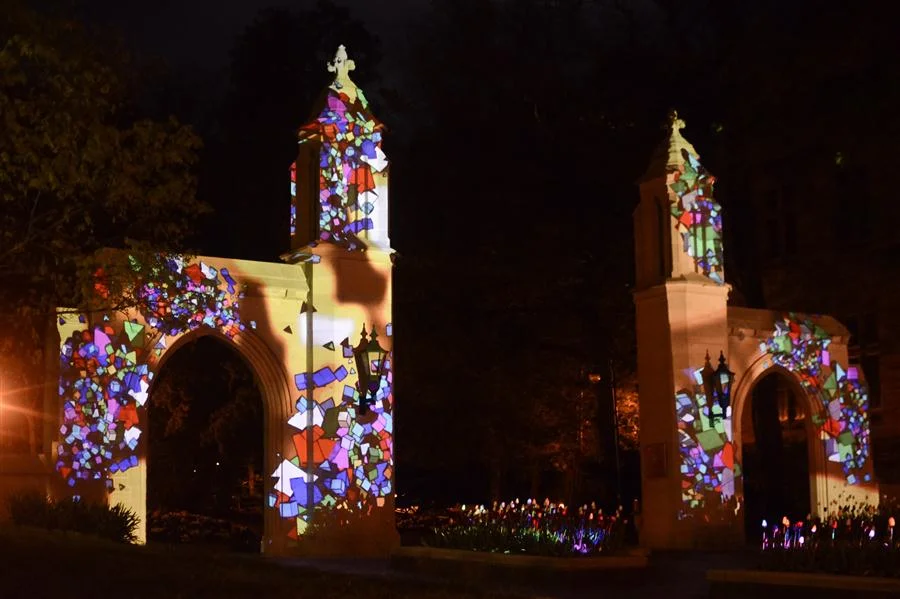
Using video projections and fog machines, seniors Matt Starr and Taylor Bryant created a projection mapping show, bringing the Sample Gates alive for Arts Week
Everywhere.
Each projection show was paired with original music by Jacobs School of Music
students.
The shows, performed April 1 and 5, lasted 10 minutes, and the projections included images ranging from a simple outline of the gates to dancing pickles.
Starr and Bryant were approached by IU Cinema Director Jon Vickers and, from there, were inspired to propose a project for AWE.
Both seniors are pursuing a degree in digital art and are interested in video projection mapping.
“We chose the Sample Gates because of the actual geometry,” Starr said. “It’s not your typical building. It’s central, it’s the heart of campus.”
Bryant rendered the Sample Gates in 3-D from scratch. From that template, the seniors created animations.
“We didn’t want it to be like a typical projection mapping,” Bryant said.
Bryant has been teaching himself cinema, skills not taught in the School of Fine Arts, for about five years now.
Because most of their coursework is done on computers, Starr and Bryant said they enjoy projection mapping because it lets their ideas leave the computer screen.
“Matt got me into projection mapping,” Bryant said. “There is a lot of potential for stuff like this, and we wanted to take it to the next level.”
The seniors have been working on the projection show since the beginning of the semester. Both noted the support they received from public and from faculty members helped bring their idea into actuality.
“I’ve never found any other video projection mapping on a college campus, or no record of it,” Starr said. “As of now, we’re saying that this is the only one officially that has been done on a college campus and at least in Indiana, for that matter. We just want people to see what’s possible.”
By Morgan Smith
A series of 3D renders created during my last few months as a resident of Bloomington, Indiana.
A collection of some of my favorite videos that I worked on at The Onion.
Motion Design - Compositing - 3D Animation - Matte Painting
A selection of geometric and procedural animations created for various projects.
Projection mapping at The W Hotel: Times Square for the 2014 Superbowl weekend. Football imagery, as well as the two teams colors were mapped and animated on hanging pillars in the hotel lobby for guests to watch as they made their way to and from their rooms
USA Today
2010 - I spent around 2 weeks of my sophomore year of college hanging out with this Mouse and building his cheese house for a FinTech Start-up. It was my first-time doing 3D character animation…
Design, 3D animation, motion graphics
Script and VO by Torlando Hakes
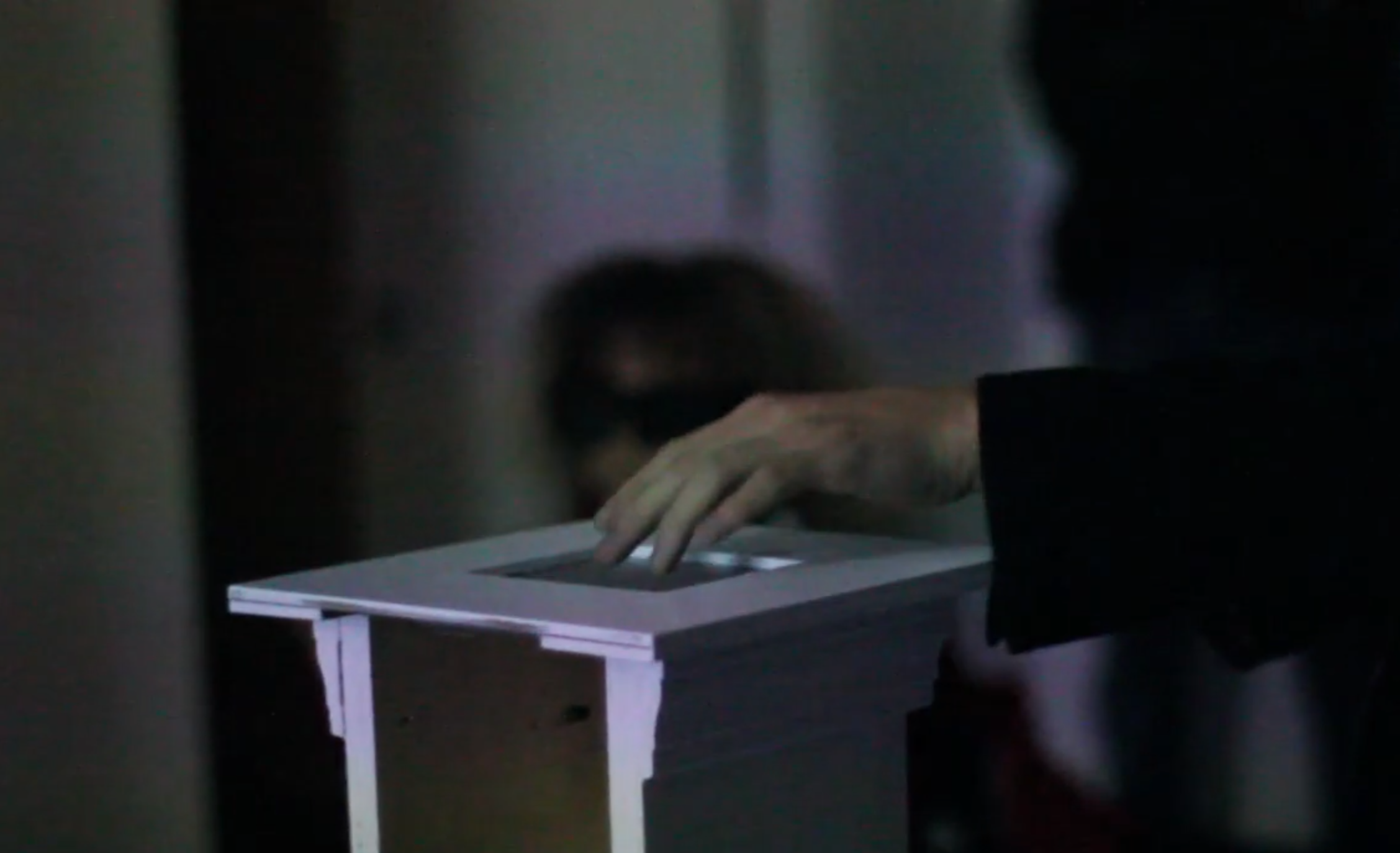
The piece combines 3-D video, computer animation, interactive sound & light installation and textiles. A ten-foot tall, three-foot wide 3-D projection stands in the center of the far wall. As 3-D objects extended into the audience space they become metaphoric invitations of exercising agency, life, death, rebirth, resurrection and the quest for perfection.
Video Artist: Torlando Hakes
3-D: Taylor Bryant
Light & Electronics: William Huster
Sound: Mike Dixon
Construction: Stephen Marchant
Model: Christina Connelly
Camera: Eric Ayotte
Contracted to develop an animated avatar that evolves based on the user’s preferences related to various media genres.
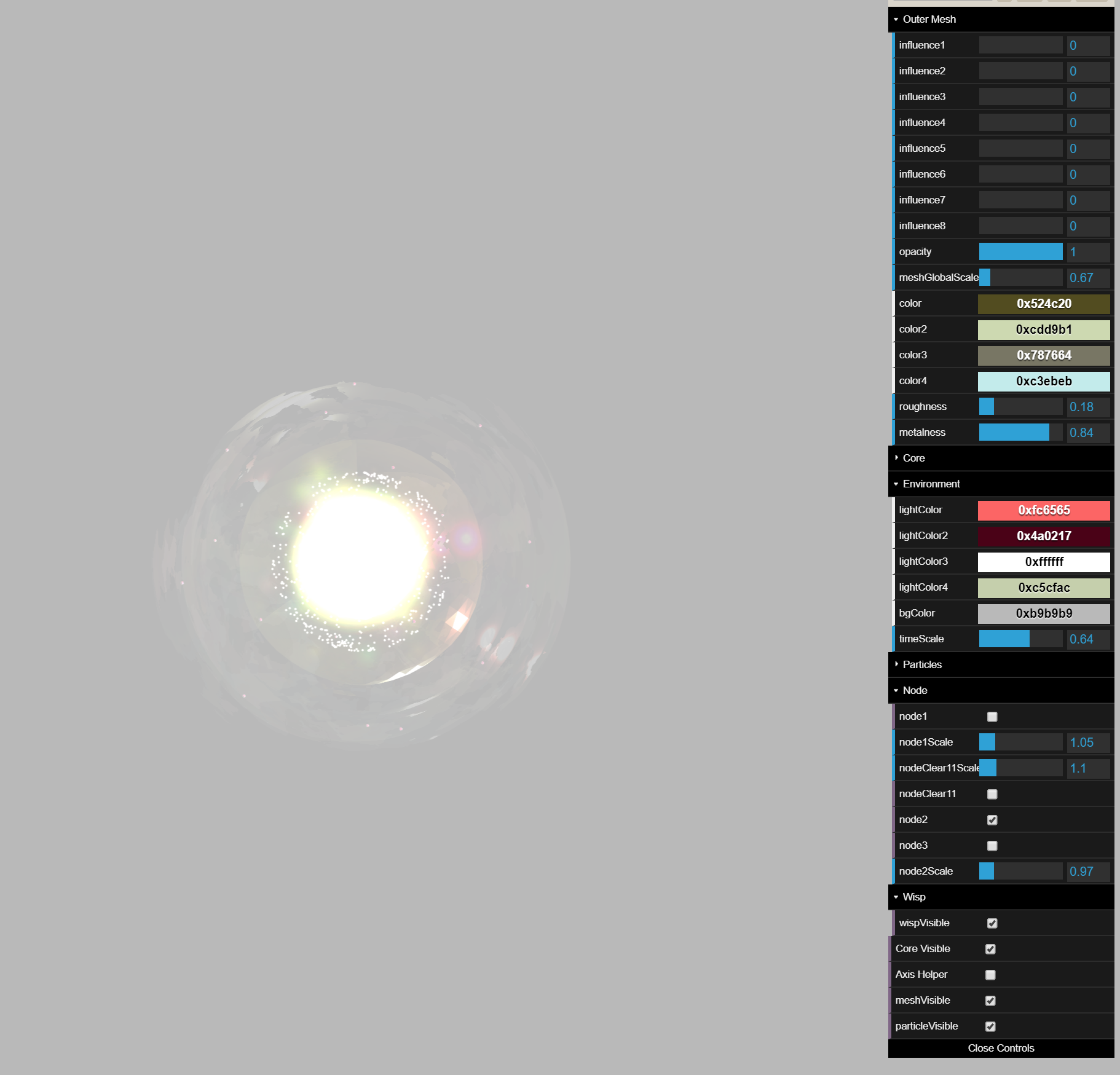
Sketched in C4D
Whitebox built with three.js
Rotoscope - Compositing - Color
Directed by Max Bartick
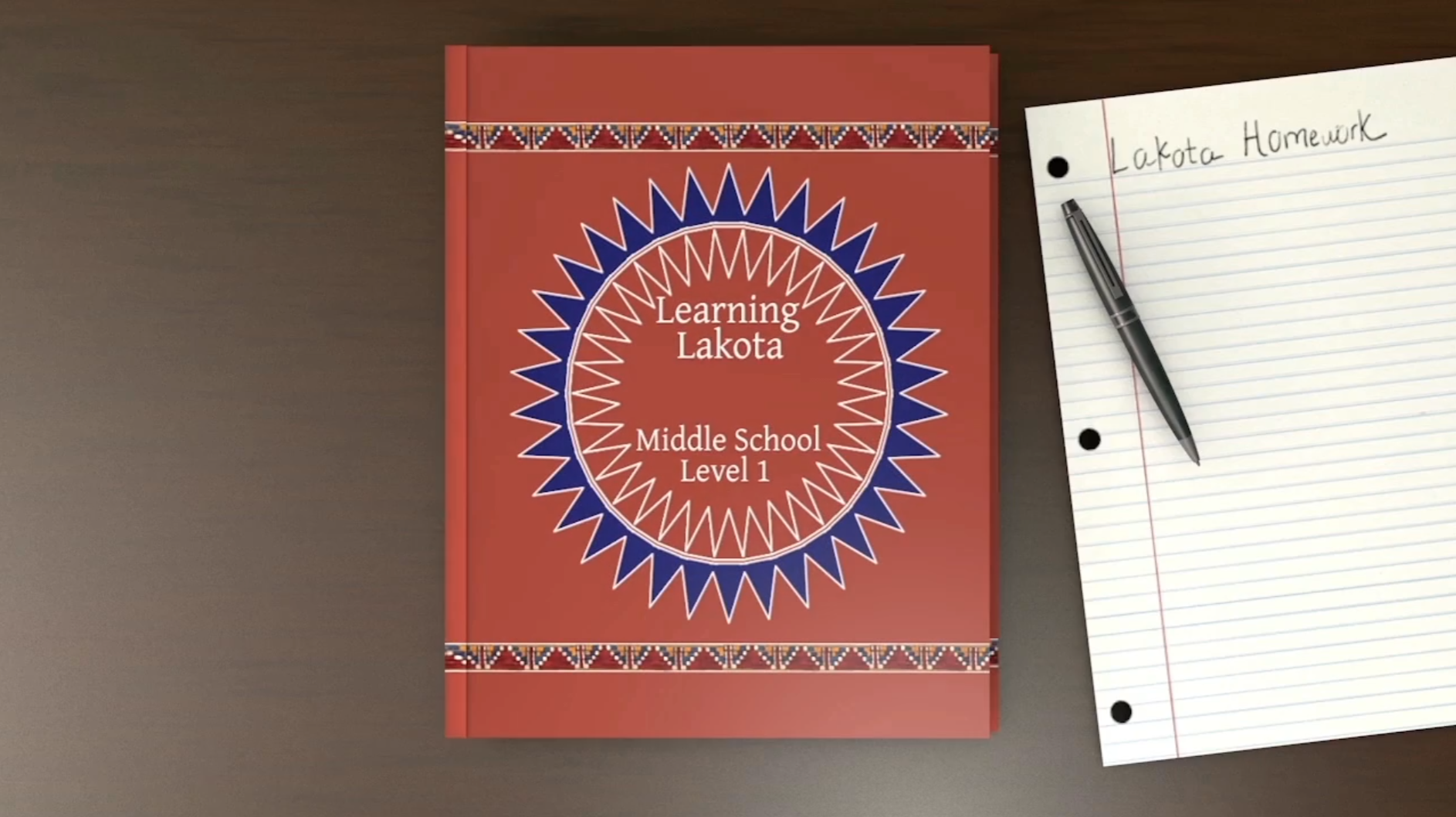
Designed and developed textbooks, interactive games, web apps, tests, and moodle database to support the preservation of the Lakota Language on Pine Ridge Indian reservation.
Moving Lakota Language into the Digital Age
- August 19, 2013
Ever heard of Moodle? If you thought that you just got a strong handle on today’s current technology, you might want to think again. Using this innovative modular learning platform, Red Cloud’s Lakota Language Project is now bringing its comprehensive Lakota language curriculum into the digital world.
This school year Lakota text books, quizzes, papers, resources and more will be digitized and available on the web to students and faculty at Red Cloud. According to Lakota Language Project teachers and directors, having materials accessible from any computer at any time will open up language learning in a whole new way.
Taylor Bryant, the Indiana University multimedia specialist working closely with Red Cloud’s Lakota Language Project, explains that creating courses in Moodle provides a central location for Lakota language materials. The Moodle platform can also serve as a tool to assist teachers with administrative tasks.
“We decided to go the route of an online learning management system when storing the material because of the many benefits that come with it,” said Bryant. “Because everything is digital, the majority of tests and assignments will be automatically graded and can provide teachers with data sets to see what areas in the course students are struggling with.”
Other features such as a searchable online glossary, access to Lakota audio recordings and other multimedia resources will be introduced to students and accessible wherever an internet connection is available—in the classroom or at home.
Bryant was on campus recently to roll out this new technology for Lakota teachers. Every August, Red Cloud’s partners from Indiana University provide teachers with a professional development workshop that addresses methods, best practices, grading, pacing, curriculum usage, and specifically this year, technology and multimedia.
During this month’s workshop, Red Cloud language teachers were introduced to the Moodle interface. They learned how to incorporate a wider variety of technological resources into their daily instruction.
“How wonderful it is to see every member of our team working, sharing, and mentoring each other!” said LLP Site Coordinator and Teaching Assistant Melissa Strickland after the workshop. “The success of the curriculum--and the progress our students make--is so dependent upon teamwork; as long as we all work together to keep our instruction student-centered, we can't go wrong. Utilizing these new online tools will make this process more simple and efficient for both students and teachers.”
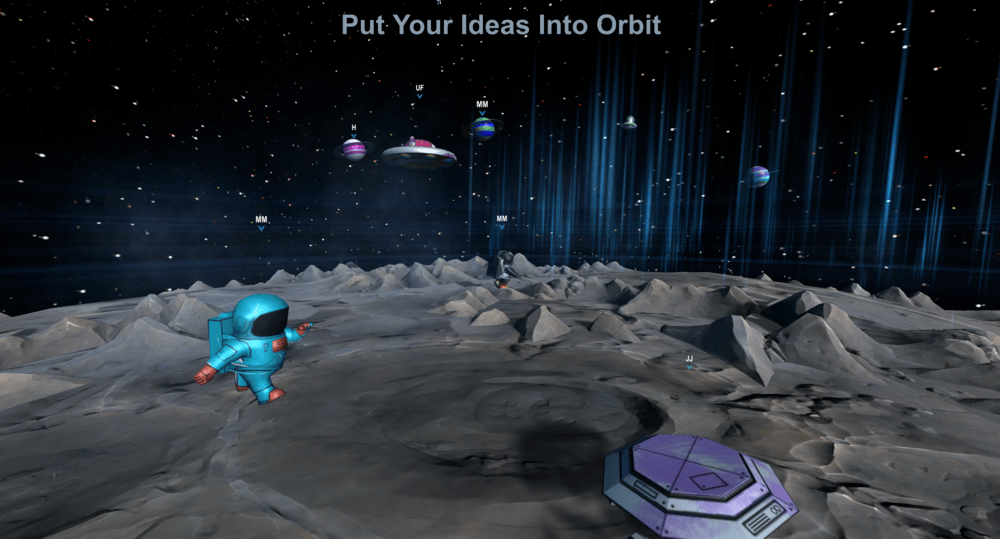
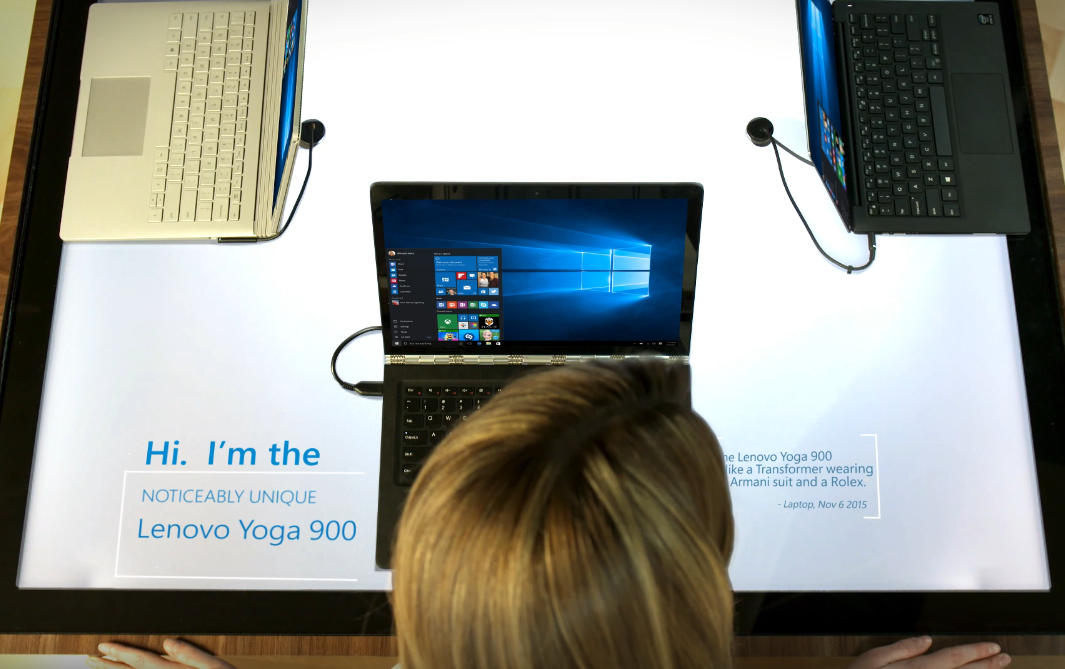
Concept and design of a multi-screen/user application.
Users can customize 3D objects then populate into a communal space.
Concepted, designed, prototyped, and managed end-to-end platform development.
Microsoft News
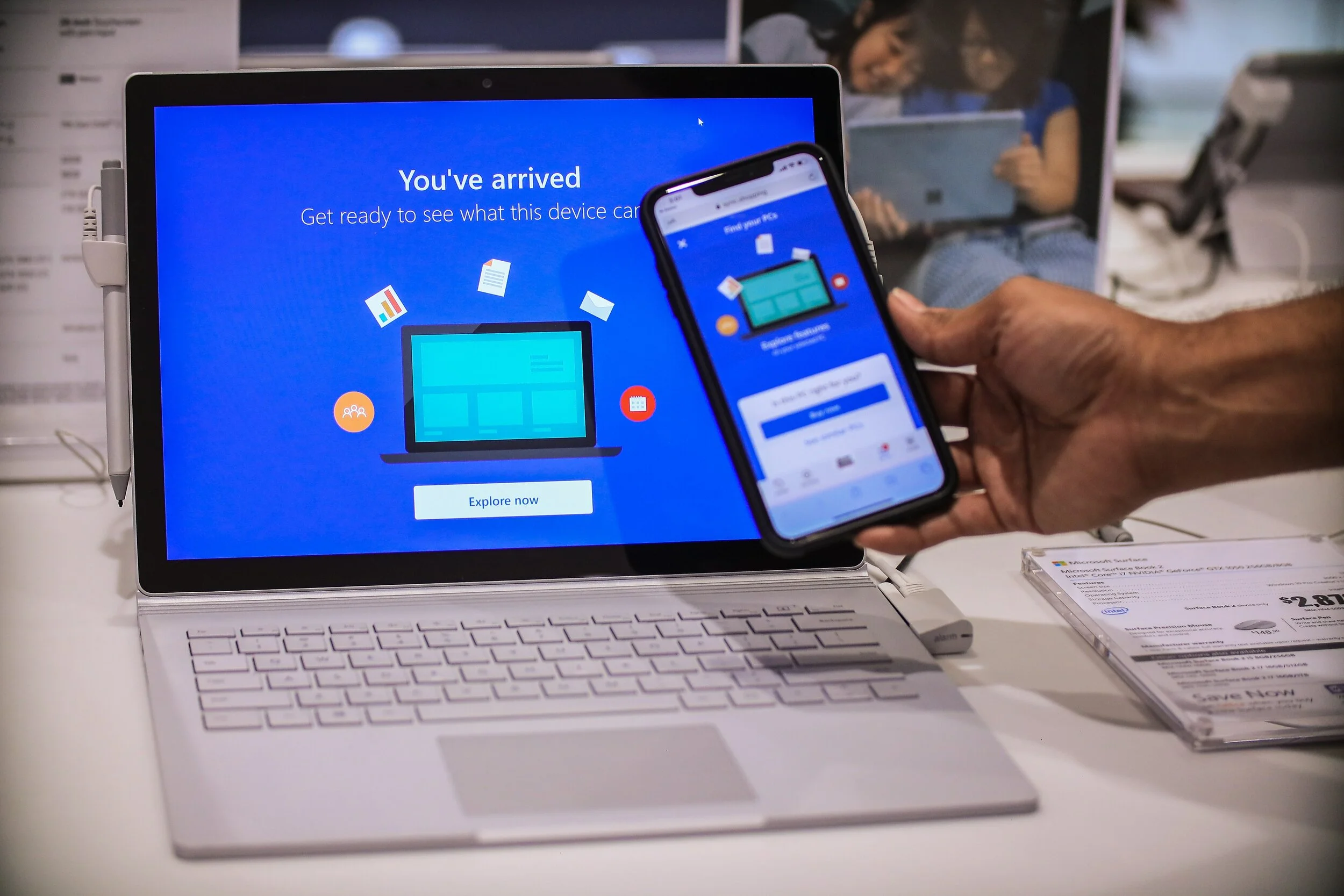
Microsoft announced the global debut of a retail solution, available first in Harvey Norman, that empowers consumers to make informed purchase decisions amidst the myriad of options available online and offline.
The solution, called Microsoft Synchronized Shopping, is one expression of Microsoft’s broader retail reimagined strategy aimed at simplifying the consumer journey by leveraging intelligent cloud technology.
“Enabling great customer experiences is at the heart of our retail reimagined initiative, and this new intelligent edge solution is designed to break customer choice paralysis by providing a seamless online and in-store experience,” said Ami Silverman, corporate vice president, worldwide sales, consumer & device sales division, Microsoft. “Microsoft Synchronized Shopping marks the first of many innovative solutions that we and our partners will bring to market to transform the retail journey, and we are honored that our longstanding partner Harvey Norman is piloting this experience with us.”
“Customers must be able to make decisions holistically, especially in a digitally connected world. This has always guided how we curate our assortment of offerings, and it now shapes how we look at connecting online and offline channels seamlessly for our customers. Synchronized Shopping is a major step in the right direction to help all of us live this ‘connected life’. I am excited to see the results of this pilot run and we will continue to improve on and expand this experience.” said Katie Page, chief executive officer of Harvey Norman.
With the online proliferation of options and the anywhere/anytime nature of shopping via mobile devices, two issues plague the customer journey for consumer electronic purchasers today. First, shoppers (80% of whom start their journey online[1]) end up delaying or even postponing a purchase because they are overwhelmed by the number of choices. Second, they find it difficult to choose the product that best meets their needs, without conducting extensive research, and often end up buying a less-than-satisfactory device. This “choice paralysis” inspired the design of Microsoft Synchronized Shopping.
With the Microsoft Synchronized Shopping solution, shoppers use a customized conversational A.I. driven product advisor, on the Harvey Norman website, that asks a series of questions to identify their needs, then recommends devices that best meet those specific needs such as long battery life or storage capacity. Product advisor results reflect devices that are on display in Harvey Norman, where customers can go to try them out. The immersive and engaging experience starts when the shortlisted device(s) on the website creates a shopper pass on the mobile device with embedded geo-location services. When shoppers are in proximity of the store where the specific PCs are available, they get a phone notification, and once they enter the store are guided to the exact PCs that were recommended by the online advisor. This simplifies the in-store experience, eliminating the need for shoppers to spend time navigating through all the choices in the PC aisle. In addition, it provides a seamless online-offline purchase journey tailored to their needs which is highly secure (and with no footprint of the user on any of the interacting devices).
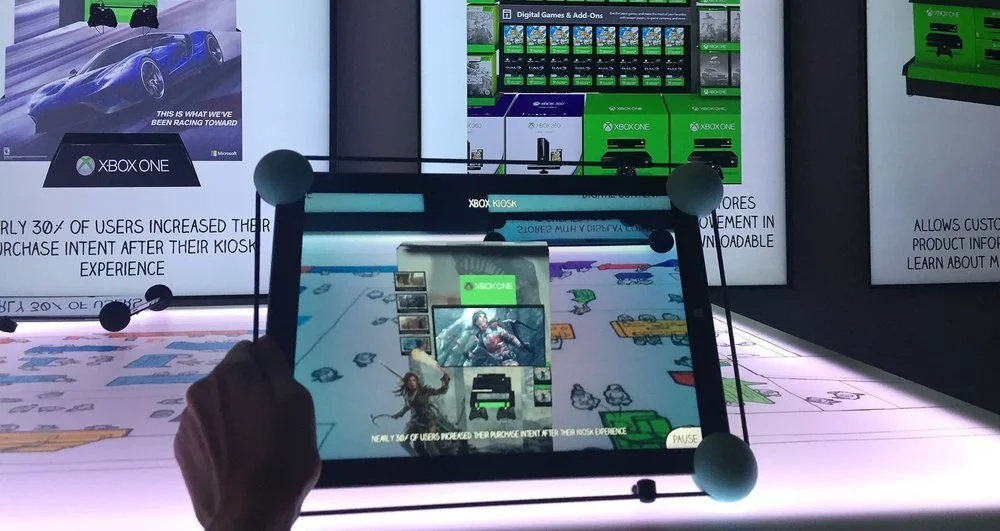
Concept and design of AR multi-screen interaction.
When a user engages with a product in AR supplemental content is displayed on adjacent screens.
Concept and development of digital display messaging relative to user proximity.
Information is progressively disclosed as a user approaches the digital signage.
The construct was initially piloted within custom-built fixtures equipped with integrated sensors, but has since moved to individual product for scale.